Stop Chasing Invoices: How Service Businesses Automate Payment Follow-Up
Chasing invoices is time-consuming, awkward, and completely avoidable. Here is how service businesses build an automated follow-up system that collects faster without anyone having to remember to follow up.
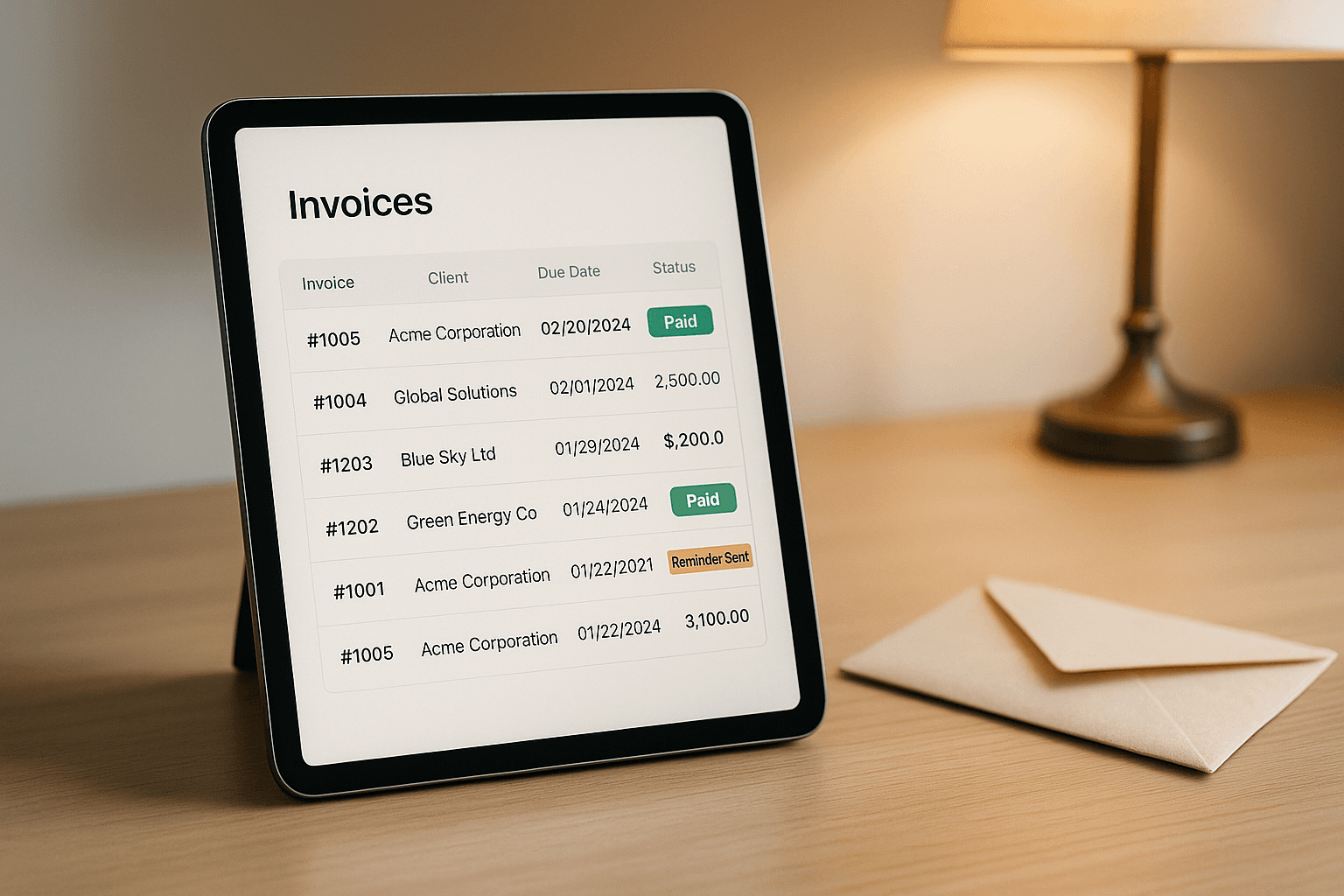
There is a specific kind of dread that settles in when you check your accounts receivable and count the invoices that are more than 30 days old. You know which clients they belong to. You know you need to follow up. You also know the follow-up will be awkward, may get ignored, and will take time you do not have. So the invoices sit. They age. Some of them eventually get paid. Some of them do not.
This is not a cash flow problem. It is a systems problem. Specifically, it is the problem of relying on a human to remember to do something at the right time, with the right message, consistently, for every invoice, without the relationship getting weird. Automation handles all of this better than a human does, and it does it without the awkwardness.
Why Chasing Invoices Is a Bigger Problem Than It Looks
The average small service business carries 12 to 18 outstanding invoices at any given time. Most of those invoices are not being disputed. The client forgot, or they are sitting in an approval queue, or they paid a different bill first and meant to get back to yours. A single well-timed reminder moves most of them without any negotiation required. The problem is that well-timed requires someone to know when the invoice was sent, how long it has been sitting, and when the next follow-up should go. Managing that manually across 15 invoices, each at different stages, is the kind of work that requires more attention than it deserves and gets less than it needs.
The Manual Follow-Up Math Nobody Does
Let's say you send 40 invoices a month. Twenty of them get paid without follow-up. Ten need one reminder. Eight need two. Two need a more direct conversation. If each reminder takes five minutes to compose and send, checking the invoice, finding the right contact, writing a message that is firm but not hostile, the follow-up on those 20 invoices costs you about 100 minutes per month. That sounds manageable until you notice that it is happening during the time you should be running the business, and that some of those reminders are not getting done at all because something else came up.
What Automated Invoice Follow-Up Actually Looks Like
An automated follow-up sequence is built once and runs forever. When an invoice hits day 7 without a payment record, a friendly reminder goes out automatically. Day 14, a second reminder. Day 21, a firmer message. Day 30, a notice that the account is overdue. Each message is personalized with the invoice number, amount, and a payment link. The tone escalates gradually without anyone having to think about it. When payment comes in, the sequence stops. When payment does not come in by day 30, the invoice flags for a human conversation.
The sequence runs for every invoice without exception. It does not forget. It does not get busy. It does not hesitate because the client is a friend of a friend. It sends the message at the right time, with the right tone, and with a direct path to payment.
What to Watch Out For
Not every invoice should go through the same sequence. A client you have worked with for four years who is three days late is different from a new client who is 21 days past due on their first invoice. A well-configured automation accounts for this: client type, invoice size, relationship history, and whether the contact has responded to prior communications all feed into which version of the sequence fires. Building those rules takes a few hours on the front end and saves every future follow-up from being the wrong tone at the wrong time.
Case Study
First Point Cleaners
Automated invoice reminders replaced manual follow-up. Late payments dropped within the first billing cycle. The team stopped spending Fridays chasing what was already owed.
If you have more than five invoices over 14 days old right now, an automated follow-up system would pay for itself in the first month. Show us your current invoicing setup and we will tell you what to build.
Book a Strategy CallFree Resource
Get the automation playbook.
Practical guides on what to automate first, sent to your inbox. No fluff.