How Small Businesses in Windsor and Ontario Are Using AI to Compete With Larger Rivals
Large competitors have enterprise software, dedicated ops teams, and budgets for things that just work. Small businesses in Windsor and Ontario are closing that gap with targeted AI automation and some of them are outoperating much bigger players.
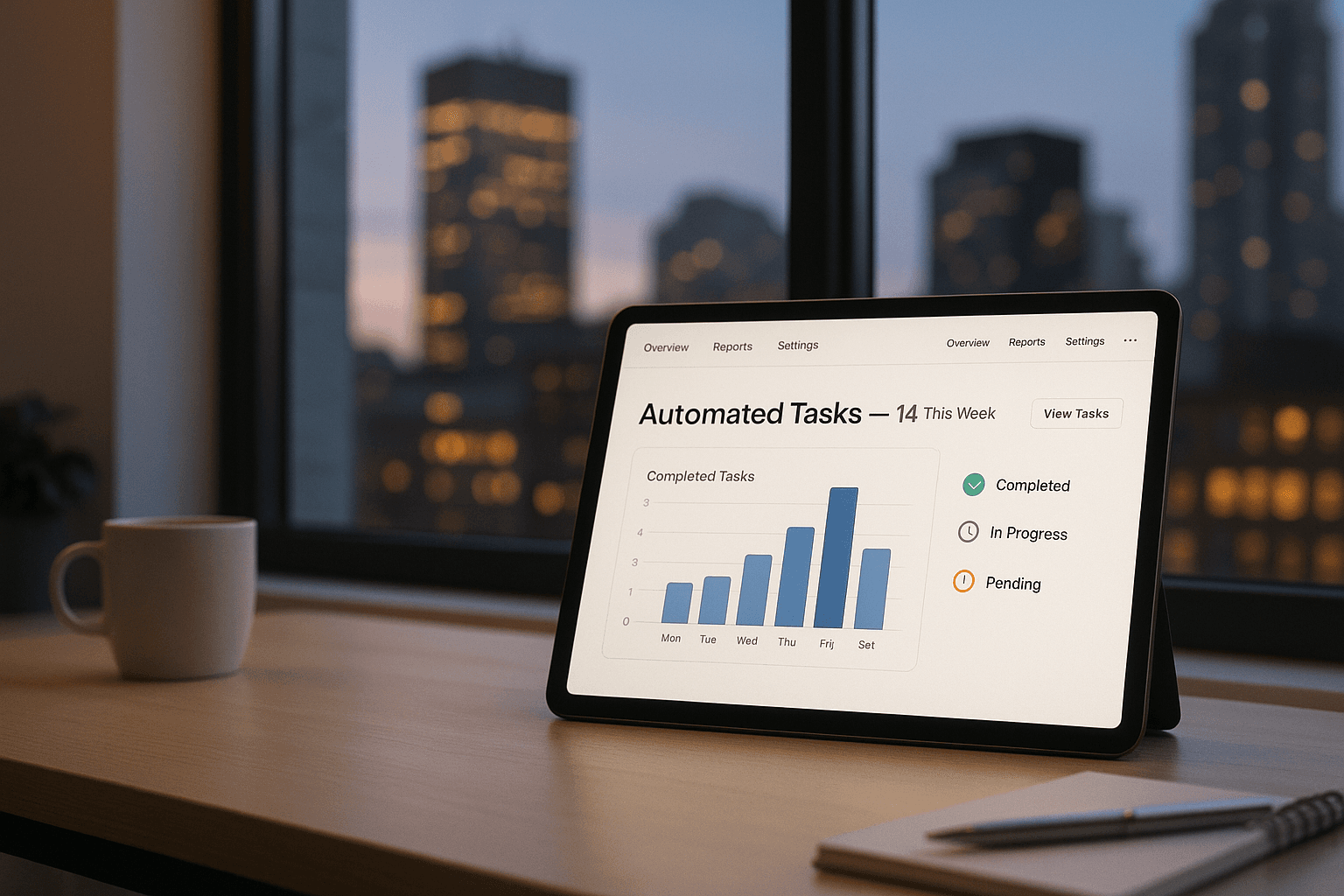
Being a small business in a market with established players used to mean accepting certain disadvantages. Slower response times because you cannot staff 24 hours. More manual work because enterprise software costs what it costs. A smaller marketing footprint because the big players can outspend you. Some of those disadvantages are still real. But the response time gap has largely closed, and it closed because of automation tools that a three-person business can now deploy for the same cost as a gym membership.
The Problem With Being Small in a Market With Big Players
The specific advantage large businesses have is not always what small business owners think it is. It is usually not brand recognition in a local market, where word of mouth and Google reviews often matter more. It is not necessarily service quality, where a smaller operation with a founder still doing client work often outperforms. The real gap is operational efficiency at scale. Large businesses have processes that run without people having to remember to run them. Follow-up happens because a system makes it happen. Quotes go out because a template generates them. Scheduling confirms because a tool sends the message. Small businesses do all of this manually, which means it depends on a person having the time and remembering to do it.
What AI Automation Levels the Playing Field On
Lead response time is the clearest example. A large service business with a staffed call center responds to web inquiries in under five minutes. A two-person cleaning company responds when someone has time, which might be two hours later. The lead did not wait. The lead filled out two more forms after yours. An AI voice agent or automated text response changes this: every new lead gets an immediate, intelligent response regardless of the time or how busy the team is. The operational gap closes.
Client communication is the second example. Large businesses send booking confirmations, appointment reminders, job status updates, and follow-up surveys automatically because their enterprise software handles all of it. A small business can now do every one of those things with the same reliability using tools that cost a few hundred dollars a month, connected through an integration layer that took a few weeks to build.
Three Real Examples From the Region
A cleaning company in Windsor was manually texting appointment reminders the day before every job. Their no-show rate was averaging 18% because some reminders were late and some were forgotten entirely. After automating reminders, set up once and running ever since, the no-show rate dropped to under 5% within 60 days. The owner stopped doing reminder texts at 9pm.
A junk removal company in Ontario was dispatching jobs through a combination of five apps that did not connect. Coordinators were re-entering job details in three separate places per booking. After building a single dispatch flow, the same team handles double the daily job volume. They did not hire anyone.
A staffing agency serving healthcare clients was spending coordinator time on shift confirmations that could have been automated. After building an automated shift notification and confirmation system, coordinators shifted that time toward client development. The agency grew volume by 40% in the first year without adding headcount.
Case Study
First Point Cleaners
Manual reminder texts replaced with automated scheduling confirmations. No-shows dropped from 18% to under 5%. The owner reclaimed their evenings.
If you are based in Windsor, the GTA, or anywhere in Ontario and you are doing more than five manual steps per job or per client interaction, we can show you what those steps cost and what it would take to automate them. The geography does not matter. The process does.
Book a Strategy CallFree Resource
Get the automation playbook.
Practical guides on what to automate first, sent to your inbox. No fluff.