The Real Cost of Manual Scheduling (Most Business Owners Never Calculate This)
You know manual scheduling takes time. You probably do not know how much, in dollars, it costs your business every month. The number is almost always higher than people expect and the return on fixing it is almost always faster.
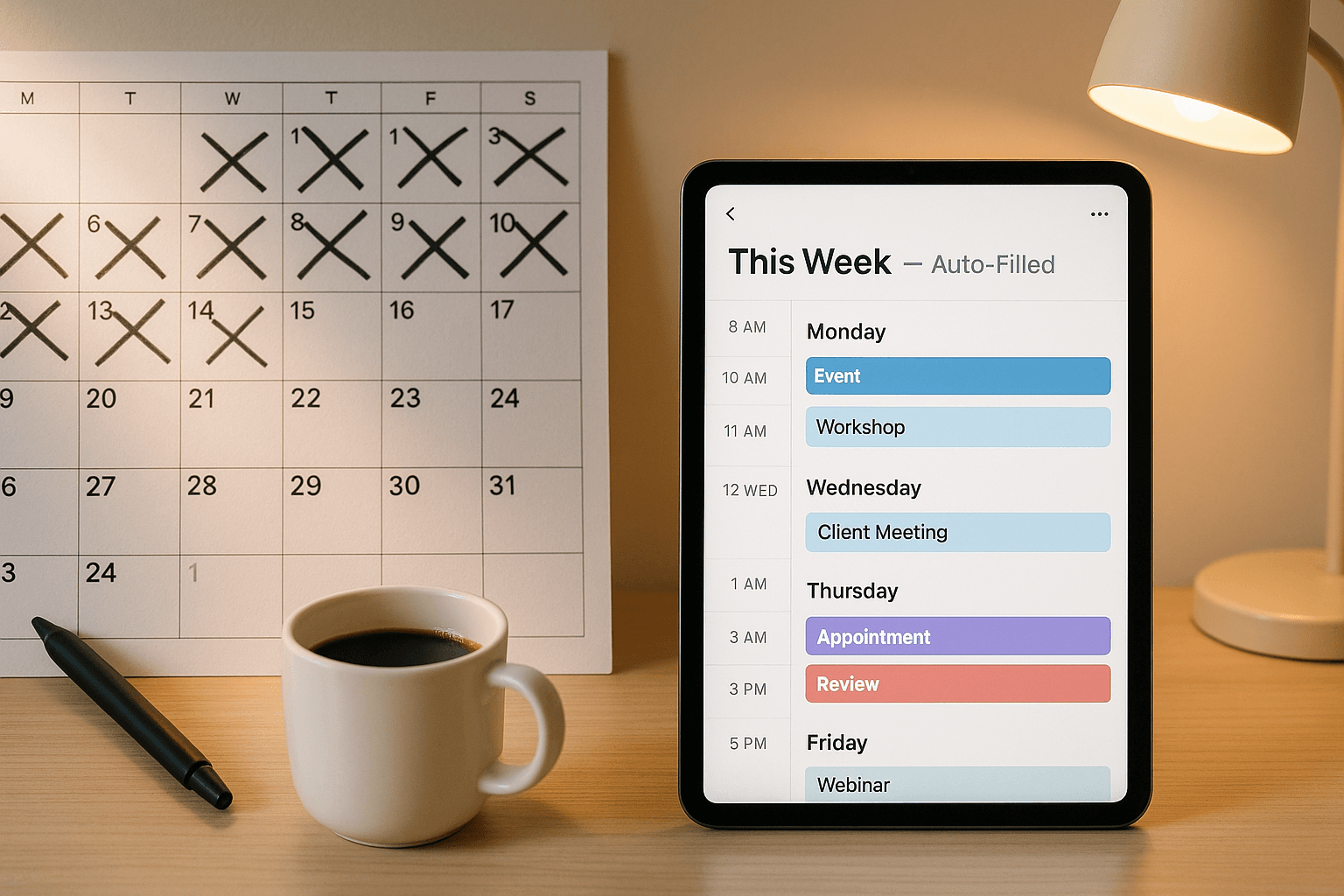
Nobody builds a scheduling system on purpose. It builds itself, gradually, out of necessity. A calendar here, a text thread there, a spreadsheet for the weekly overview, a whiteboard for the dispatcher who likes to see it physically. Each piece is added to solve a real problem. At some point the collection of pieces becomes the system, and nobody ever sits down to calculate what it actually costs.
The Math Nobody Does on Scheduling Time
A service business running 80 jobs a month. Each job requires someone to confirm availability, book the slot, send the client a confirmation, schedule the crew or driver, send a reminder the day before, and update the status after completion. At 15 minutes per job for all the scheduling touchpoints combined, a conservative number for a manual process, that is 20 hours a month of scheduling time. At a coordinator rate of $22 per hour, that is $440 a month, $5,280 a year, just for the time. Not for the mistakes. Not for the missed bookings. Not for the jobs that fell through because the confirmation never went out.
What Drops Into the Gap
Manual scheduling gaps are predictable. The same failures happen at the same pressure points in every manual operation. Friday afternoons. Mondays after a long weekend. When the person who usually handles scheduling is out. When the phone is ringing, an email is coming in, and someone is standing at the desk asking a question at the same time. Under those conditions, confirmations get delayed, reminders do not go out, and someone assumes someone else handled the follow-up. Sometimes they did. Sometimes nobody did.
The cost of a missed confirmation or a no-show is almost never zero. In a service business, a crew or driver shows up to a job that was not properly confirmed, the client is not prepared, and the visit becomes a rescheduled visit. You absorb the drive time, the crew time, and the rescheduling friction. Multiply that by the number of times this happens in a month and the number starts to look serious.
The Hidden Cost That Is Worse Than the Time
The hours are the visible cost. The hidden cost is capacity. A business where scheduling consumes 20 hours a month has made an implicit decision about how much volume is possible. The coordinator or owner doing the scheduling has a ceiling. When you hit that ceiling, the options are: hire someone, which costs $40,000 to $50,000 a year, or automate, which costs a fraction of that and scales indefinitely. Most businesses do not realize they have hit the ceiling until they are turning down work or dropping quality because the operations cannot keep up with the volume.
What the Numbers Look Like After Automation
When Junk Cycle brought their scheduling and dispatch to us, they had five platforms and 22 manual steps per job. After building an integrated scheduling flow, the number of manual steps dropped to three. Booking triggers the client confirmation. Day-before reminders fire automatically. Post-job follow-up goes out on schedule. The dispatchers now handle roughly twice the job volume they did before, with the same team.
Case Study
Junk Cycle
Five platforms, 22 manual steps, and a dispatcher team stretched thin. One integrated flow replaced all of it. Same team, double the volume.
If you have not sat down and counted the hours your team spends on scheduling in a given week, do that first. Then bring that number to a call with us. We will show you what it would take to get most of those hours back.
Book a Strategy CallFree Resource
Get the automation playbook.
Practical guides on what to automate first, sent to your inbox. No fluff.